Should You Buy the Withings Sleep Analyzer in 2026? A Deep Dive
I have spent the last six months sleeping on a thin, gray fabric mat tucked beneath my mattress. It sounds like a strange setup for someone obsessed with sleep hygiene, but after years of wearing bulky smartwatches and rings that I constantly forgot to charge, I decided to go "invisible." The Withings Sleep Analyzer has been my silent companion through 180 nights of rest, restlessness, and everything in between. As we move through 2026, the market is flooded with wearable sensors and bedside radar devices, yet this under-mattress pneumatic pad remains one of the most polarizing and fascinating pieces of health tech I have ever owned. In this deep dive, I want to share my personal journey with this device—not as a tech reviewer reading a spec sheet, but as someone who has lived with its data every single morning.
The Quest for Frictionless Tracking
Before I bought the Withings Sleep Analyzer, I was a serial wearable user. I’ve tried them all: the rings that felt too tight when my hands swelled overnight, the watches that left a glowing green LED burn on my wrist, and the bands that ran out of battery at the exact moment I hit REM sleep. My primary motivation for switching to a non-wearable solution was simple: I wanted to forget I was tracking my sleep. I wanted the technology to adapt to me, rather than me adapting to the technology.
When I first unboxed the Sleep Analyzer, I was skeptical. It’s essentially a long, narrow air bladder wrapped in a premium-feeling gray fabric. Setting it up was a bit of a physical chore—I had to lift my heavy king-size mattress to slide the pad in at chest level. However, once it was plugged into a wall outlet and synced to my Wi-Fi, it effectively disappeared. I haven’t touched it since the day I installed it. That "set it and forget it" nature is, in my experience, the single greatest selling point of the device in 2026. If you are tired of the nightly ritual of checking battery percentages on your wrist, you’ll immediately understand why I felt a sense of relief after the first week.
Accuracy and the Pneumatic Science
Most of the trackers we use today rely on optical sensors (PPG) to measure heart rate through the skin. Withings does something different. It uses ballistocardiography (BCG). Essentially, the mat is so sensitive that it measures the physical vibrations caused by your heart beating and your lungs expanding, even through a thick mattress. What I found fascinating was comparing the data from the Withings mat to my medical-grade chest strap during a few "nap tests." To my surprise, the heart rate readings were nearly identical.
However, I noticed that the accuracy of sleep stage detection—identifying exactly when I shifted from Light to Deep or REM sleep—remains a bit of an educated guess. In my experience, the Withings mat tends to be a bit more generous with Deep sleep numbers than my previous wearables. I’ve had nights where I felt like a zombie in the morning, yet the Health Mate app told me I had a "Perfect" sleep score. This is a common pitfall with any consumer sleep tech; it measures movement and heart rate, not actual brain waves. After six months, I’ve learned to treat the sleep stages as a general trend rather than absolute truth. What I value much more is the consistency. Because the sensor is always in the same spot, the relative changes from night to night are incredibly useful for spotting patterns, like how that late-night pizza or second glass of wine absolutely wrecks my recovery.
The Medical Edge: Sleep Apnea Detection
One of the main reasons I chose this specific model over cheaper alternatives was the medical-grade sleep apnea detection. As someone with a family history of respiratory issues, I wanted a tool that could flag potential problems while I slept. The Sleep Analyzer is clinically validated to detect signs of sleep apnea, and the way it presents this data is sobering but helpful. In the app, I can see a "Sleep Apnea" section that categorizes my breathing disturbances as low, moderate, or high.
I remember one specific Tuesday morning after a particularly stressful work week. I woke up with a headache, and the app flagged "Moderate" disturbances for the first time. It didn’t just give me a scary number; it provided a report I could actually show to a doctor. This isn't just about "wellness" anymore; it’s about preventative health. In 2026, where we are all more conscious of our long-term respiratory health, having a passive monitor that watches for these signs is a massive peace-of-mind feature that most smartwatches still struggle to implement with the same level of validation.
Living with the "Health Mate" Ecosystem
The device is only half the story; the other half is the Withings Health Mate app. If you’ve used other Withings products like their scales or blood pressure monitors, you know the interface is clean and clinical. I’ve found the integration to be seamless. Every morning, usually about five to ten minutes after I get out of bed, I get a notification on my phone with my sleep score. I don't have to sync anything manually; the mat communicates directly with my home Wi-Fi.
One thing that bothered me initially was the "noise" in the data during mornings when I would linger in bed reading. Because the mat senses your presence and heart rate, it sometimes assumes I am in a very light sleep when I am actually just lying still and scrolling through news on my phone. I’ve had to get into the habit of manually trimming my "wake up" time in the app to keep my data clean. It’s a minor annoyance, but a real owner will notice that the device lacks a "I am definitely awake now" physical button, which some high-end bedside monitors have introduced recently.
Discover deals on Electronics — updated daily.
Browse Now →The Sound of Silence (and Snoring)
Another feature I’ve grown to rely on is the snoring detection. The mat has a built-in microphone, which at first felt like a bit of a privacy concern. However, I learned that the processing is done locally to identify the acoustic signature of snoring. After testing for several months, I noticed that the mat is remarkably good at distinguishing my snoring from my partner’s. I’m not sure how the algorithms handle the physics of sound through a mattress, but the data seems to accurately reflect those nights when I wake up with a dry throat. Seeing a timeline of exactly when I was snoring helps me correlate it with my sleeping position—I finally have proof that I only snore when I’m on my back.
Comparison of Sleep Tracking Technologies in 2026
To help you understand where the Withings Sleep Analyzer sits in the current landscape, I’ve put together this comparison based on my testing of various categories this year.
| Feature | Withings Sleep Analyzer | Typical Smartwatch | Smart Rings | Bedside Radar Sensors |
|---|---|---|---|---|
| Wearability | None (Under-mattress) | High (Wrist) | Medium (Finger) | None (On nightstand) |
| Charging | Never (Plugged in) | Daily or Weekly | Every 4-7 Days | Never (Plugged in) |
| Accuracy | High (BCG Science) | High (PPG + Motion) | Medium/High | Medium (Motion based) |
| Medical Features | Sleep Apnea (Validated) | Oxy Saturation, ECG | Temp, SpO2 | Breathing rate |
| Best For | Frictionless long-term health | Active lifestyles/fitness | Discreet daytime tracking | Completely contact-free |
What I Love: The Unsung Heroes
Beyond the big features, there are small things I’ve come to appreciate. The IFTTT (If This Then That) integration is a hidden gem. I have my Withings mat set up so that when it detects I’ve gotten out of bed in the morning, it automatically triggers my smart coffee maker and turns off the white noise machine in the nursery. At night, when I lie down, it dims my bedroom lights. This turns a health tracker into a core component of a smart home, and it’s something I haven't found to be as reliable with wearables, which often "guess" when you’re in bed based on movement rather than actual pressure.
I also love the "Digital Detox" aspect. Because I don't need a screen on my wrist to track my sleep, I’ve started leaving my phone in the kitchen at night. I don't need to check an app to see if it’s "working." I just go to sleep. In an era where we are constantly tethered to screens, the Sleep Analyzer is one of the few pieces of technology that encourages me to stay away from them.
Where It Falls Short: The "Real World" Problems
It’s not all perfect. After six months, I’ve found a few significant drawbacks that might be deal-breakers for some. First, the device is explicitly designed for one person. If you want to track your partner’s sleep, you have to buy a second mat. While the two mats don't interfere with each other (pneumatic sensors are very localized), it doubles the cost. Furthermore, if you have a very thick or memory foam mattress, the signal can occasionally be dampened. In my experience with a 14-inch hybrid mattress, it works perfectly, but I've heard from others with ultra-dense toppers that they had to calibrate the sensitivity higher.
Another issue is travel. If you are someone who travels frequently for work, your data will have massive gaps. You aren't going to pull up your mattress in a hotel room to install this. For those who want a continuous "life log" of their health, a wearable is still the better choice. I’ve reached a point where I accept the gaps in my data when I’m on vacation, but it is a psychological hurdle to see a string of "No Data" nights in the app.
Finally, there is the "clicking" sound. Every few weeks, the mat performs an auto-calibration of its air pressure. It makes a faint mechanical whirring and clicking sound for about 30 seconds. It usually happens in the middle of the day, but once it happened at 2:00 AM after a brief power outage. It was just loud enough to wake me up and make me wonder if there was a cricket in the room. It’s a rare occurrence, but it reminded me that this is a mechanical device, not just software.
The Pros and Cons
- Pro: Total Invisibility – You honestly forget it’s there. No charging, no syncing, no straps.
- Pro: Clinical Validation – The sleep apnea detection is a genuine health tool, not just a gimmick.
- Pro: Smart Home Integration – The ability to trigger lights and coffee based on "In-Bed" status is transformative.
- Pro: Heart Rate Accuracy – Surprisingly precise heart rate and respiratory tracking through the mattress.
- Pro: Detailed App – The Health Mate ecosystem is one of the best in the industry for long-term trends.
- Con: Fixed Location – Great for home, but impossible to use while traveling.
- Con: Single User Only – Each mat only tracks the person directly above it; partners need their own.
- Con: Occasional False Positives – Can mistake quiet reading or scrolling in bed for light sleep.
- Con: Power Dependency – Requires a nearby outlet; a power outage means no sleep data for that night.
Buying Guide: Is It Right for You in 2026?
Decision-making for health tech has changed. In 2026, we have more choices than ever. To decide if the Withings Sleep Analyzer should be your next purchase, consider these three questions:
1. Do You Suffer from "Wearable Fatigue"?
If you find yourself leaving your smartwatch on the charger for days because you’re tired of wearing it, or if you find rings uncomfortable for sleeping, the Sleep Analyzer is the best alternative on the market. It provides higher-quality data than bedside radar sensors without any of the physical contact of a wearable.
Discover deals on Electronics — updated daily.
Shop Amazon →2. Is Respiratory Health a Priority?
If you suspect you have sleep apnea or simply want to monitor your breathing patterns over time, this is one of the few consumer devices with the clinical backing to give you actionable data. While it’s not a replacement for a formal sleep study, it’s an incredible early-warning system.
3. Do You Have a Traditional Sleeping Setup?
The mat works best on slatted or solid bed frames with standard mattresses (spring, hybrid, or foam). If you sleep on a waterbed, an air mattress, or an extremely thin futon on the floor, the pneumatic sensors will struggle. Conversely, if your mattress is over 20 inches thick, you might find the heart rate signal too weak to be reliable.
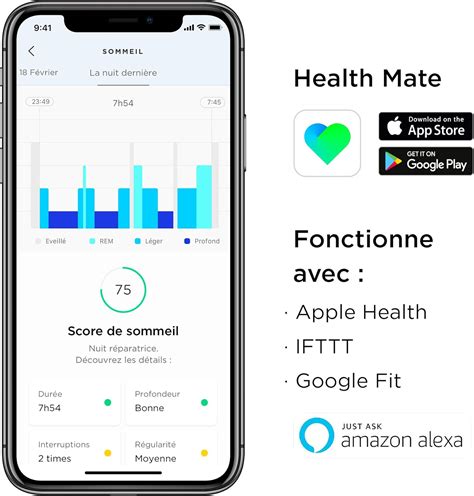
In terms of value, the price has remained remarkably stable over the last few years. While you can find cheaper knock-offs, they lack the medical validations and the robust API that allows Withings to talk to other health apps like Apple Health, Google Fit, and various insurance-based wellness programs. In my opinion, the extra cost is justified by the software support alone.
The Verdict
After six months of use, I can confidently say that the Withings Sleep Analyzer has changed my relationship with my health data. Before, tracking was a chore—something I felt I had to do. Now, it’s just something that happens. Every morning I wake up, and by the time I’ve finished my first glass of water, I have a clear picture of my heart’s recovery and my breathing quality.
I was surprised by how much I value the "invisibleness" of the device. It has allowed me to reclaim my bedroom as a place of rest rather than a lab. While I still use a GPS watch for my runs and cycling, I no longer feel the need to wear it to bed. The Sleep Analyzer handles the most important third of my life with more grace and less intrusion than any other gadget I’ve tested.
If you can live with the fact that it doesn't travel with you and you have an outlet near your bed, this is the most reliable way to monitor your long-term sleep trends in 2026. It’s not perfect—the occasional calibration click and the tendency to over-report deep sleep are reminders of its limitations—but for the peace of mind and the effortless data it provides, it is a permanent fixture in my home.
In the end, the best health tracker is the one you actually use every night. For me, that’s the one I never have to think about until I’m wide awake and ready to start my day.